
Conflict is sacred.
"Conflict is the spirit of the relationship asking itself to deepen."

Dear kapwa,1
"Conflict is the spirit of the relationship asking itself to deepen."
I read these words in September 2023 while reading Kazu Haga's 'Healing Resistance: A Radically Different Response to Harm,’ and it has stayed with me ever since. More than that, these words have reorganized my life, fundamentally shifting how I look at and move through the world.
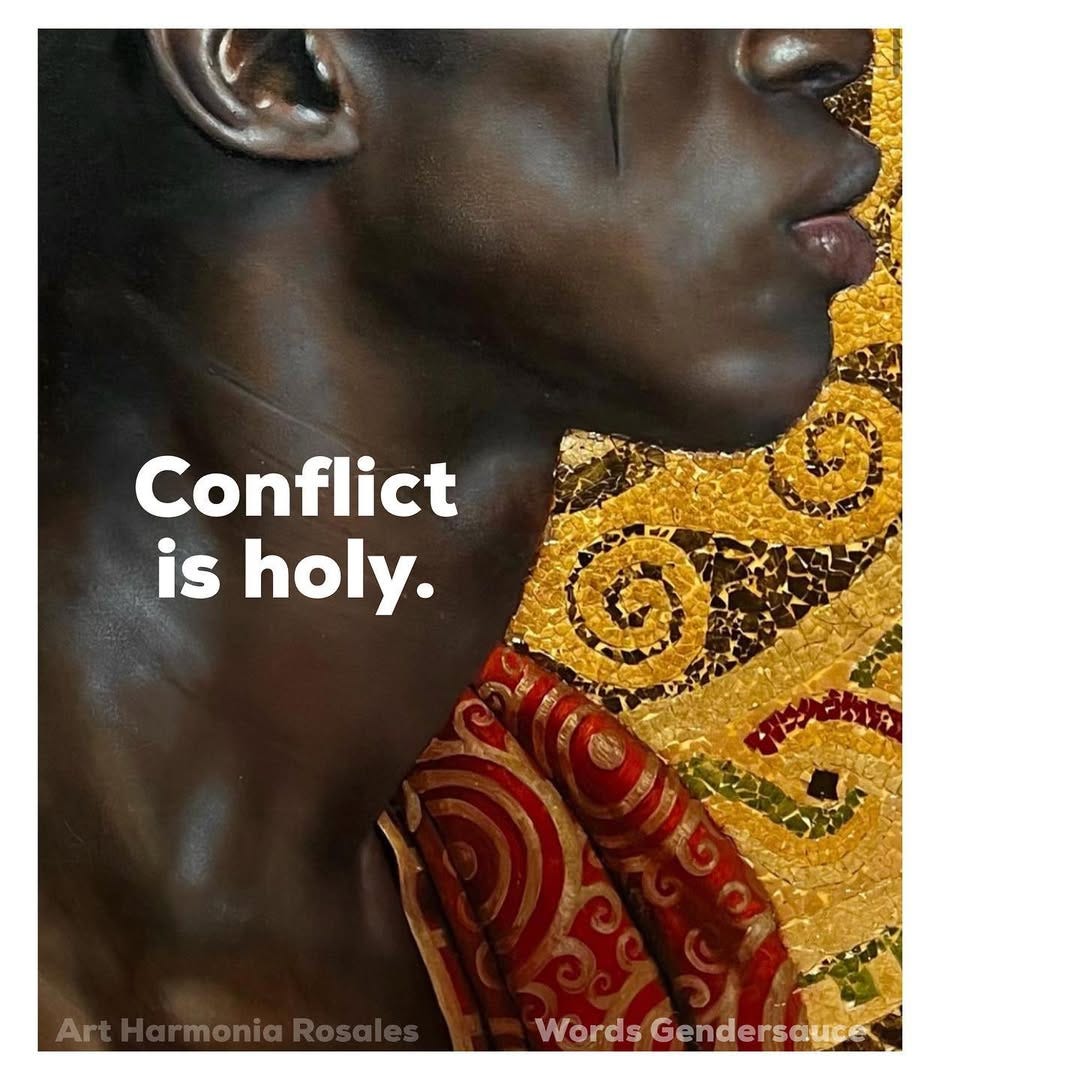
Over the last couple of years, I've been working with organizations and community groups to navigate the tensions and conflicts that arise within their circles. I haven’t shared too much about this because, well, it’s an area of work that I’m still very much growing into. To be perfectly honest, I’ve stumbled into this work accidentally, mostly informally, and very much imperfectly.
I've also been working through a lot of conflict within my own personal life, trying to figure out how to articulate my boundaries and how to move through repair (if even possible) with family and friends who have caused hurt.
Navigating the edges and contours of conflict has been beautiful, painful, and life-affirming all at once.
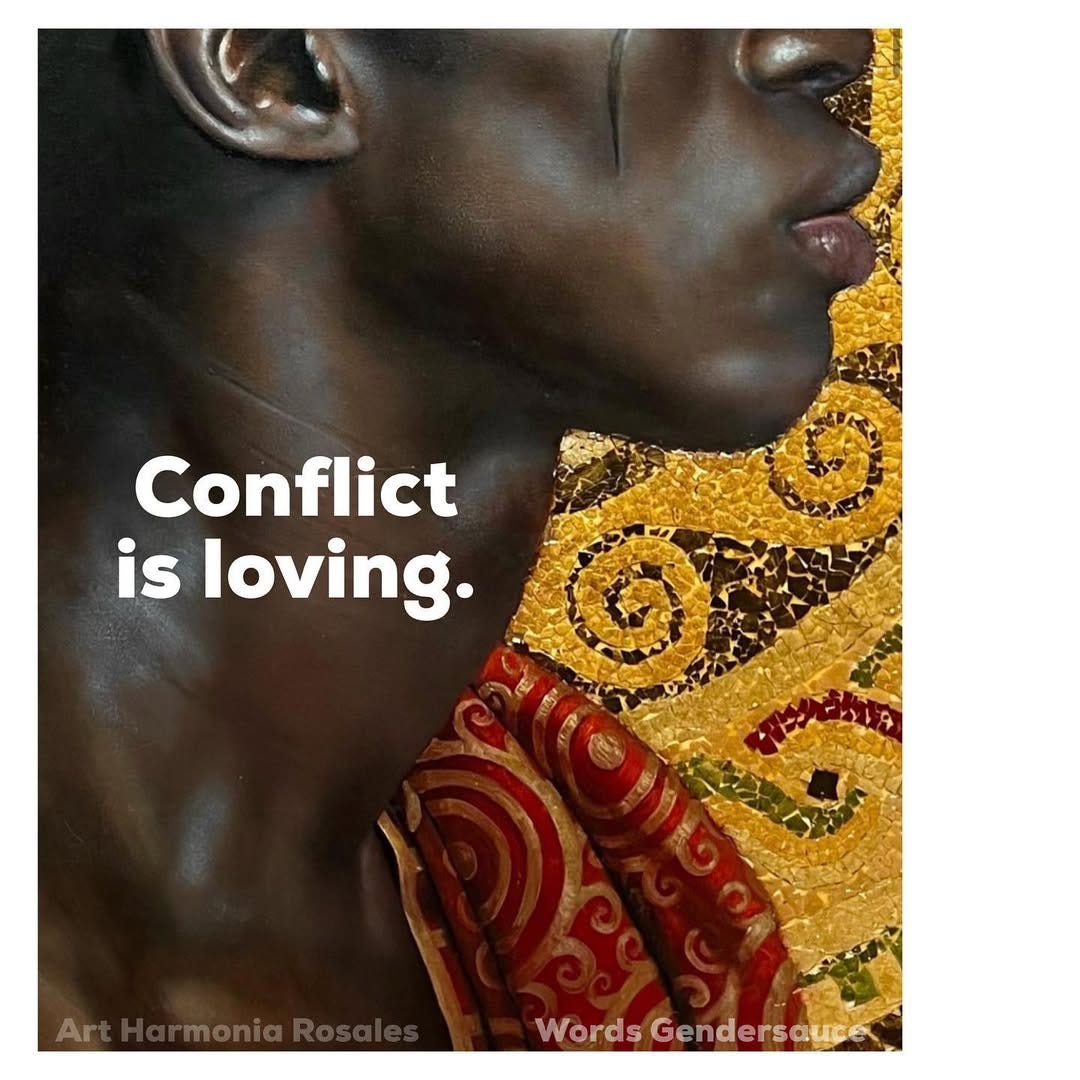
Looking at Fractals
I am thinking again about “how we are on the small scale is how we are on the large scale.”
As I deepen my work in supporting people move through interpersonal tensions within their families, professional settings, and social movement spaces, I am seeing so clearly just how terrible we are at being in conflict with each other.
We avoid, we repress, we blow up, we grow resentful, we shame, we cower, we cut ties entirely. We only seem to know how to “do conflict” in ways that hurt, that harm, that destroy something or someone.
Is it any wonder, then, just how bad it’s gotten on the large scale?
We are living at a time when brutal and inhumane deportations are taking place daily on stolen land, when a genocide is being committed and live-streamed in real time, when queer and trans lives are under attack, when when when when…
….the barrage of headlines we are hit with every day is exhausting and relentless and heartbreakingly demoralizing.
In Emergent Strategy: Shaping Change, Changing Worlds – another book that has shaped my heart – adrienne maree brown asks, "How do we shift into a culture in which conflict and difference are generative?"
How do we transform conflict to create generative possibilities? How do we organize our lives to see that “Conflict is the spirit of the relationship asking itself to deepen”? And how do we then extend that into the larger scale to see that conflict is an opportunity to transform our grander systems?
How, indeed.
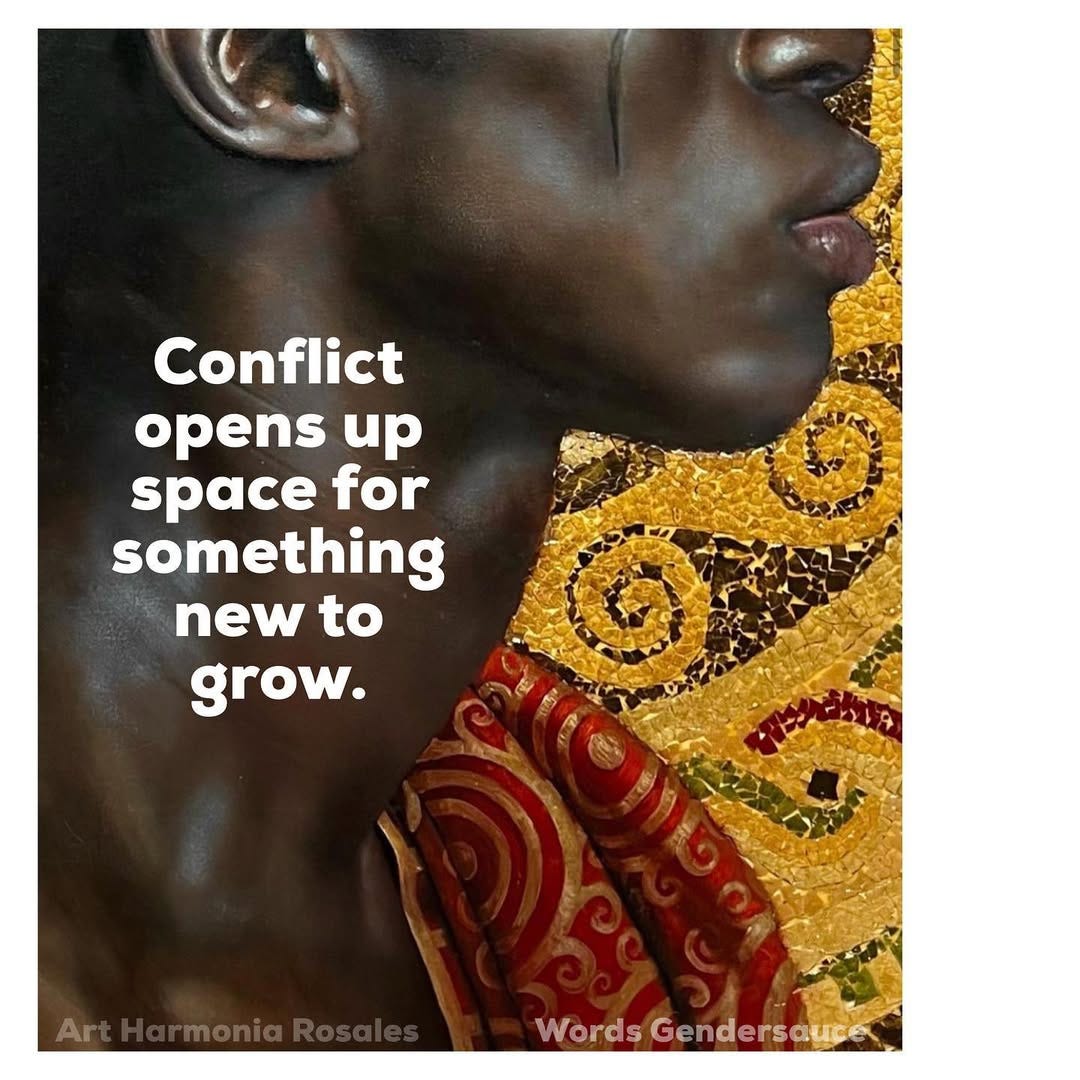
Beginning at the small scale, as usual
As if it wasn’t already clear, the need to build and create transformative practices that prioritize healing over harm, over violence, over the same shit we’ve been doing over and over again is becoming so desperately and critically urgent.
That’s why over the last year, I’ve been taking courses on conflict transformation to better understand this thing that we are all so afraid of and so bad at doing. I’ve been learning from experienced mediators and seasoned facilitators on how to hold courageous and caring spaces that make room for, and even invite, the discomfort of conflict and tension.
As in so much in life, this change begins with us.
If you’re curious about this idea of conflict transformation and want to learn more alongside me, I offer these questions for you to explore, tend to, and feel in your body:
How would you define conflict? What does it mean to you?
Are you afraid of conflict? Why or why not?
Growing up, what did conflict look like in your home or in the community around you?
In what ways do you experience conflict today?
How, if at all, has your approach to conflict shifted over the course of your life?
Do the intersections of your identity (think: gender, race, ability, class, etc.) impact your relationship to conflict and how you navigate it? How?
What stories of conflict and its resolution are you familiar with? Have been passed down to you?
How do you experience conflict in your body? What parts of your body are activated? What sensations and feelings emerge in you?
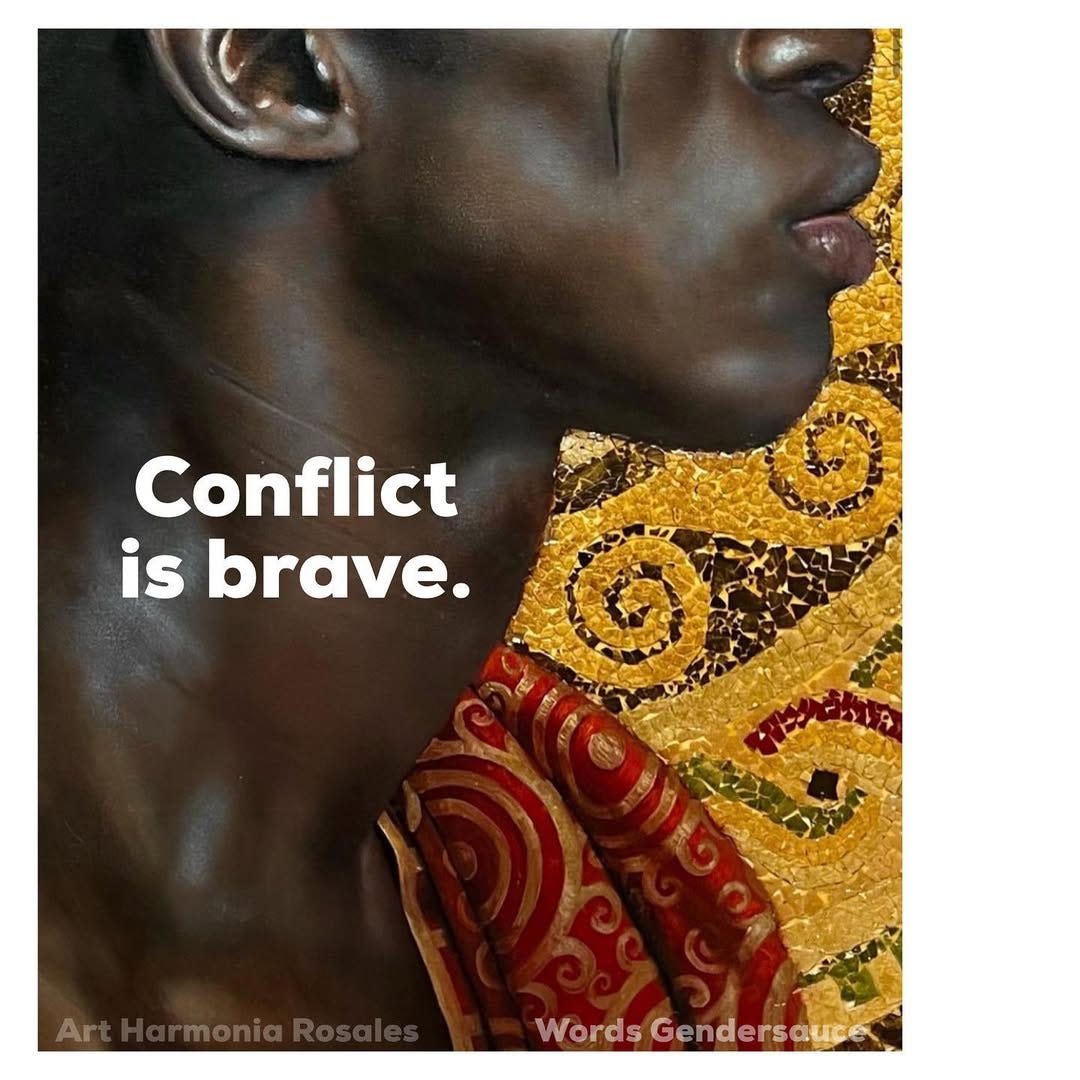
I still have so much more to learn!
Like many of us – all of us, really – I have a complicated relationship to conflict that I must unlearn and reshape. I hope to share more with you as I go deeper down this path, and I sincerely hope you’ll continue to join me…
In loving solidarity,
Justine
More Resources on Conflict Transformation:
At the start of this year, I took Kai Cheng Thom and Sera Thompson’s course on Conflict Foundations for social justice and collective healing. Their approach is that of Lewis Deep Democracy, a method born in the transition from apartheid to new democracy in South Africa. Learn more here.
I’ve also been pursuing a certification in Conflict Management and Mediation at the University of Waterloo, engaging in various training programs that incorporate a transformative approach to conflict that places people and relationships at the centre. Learn more here.
Some of my favourite books so far on this subject are
A Testament of Hope: The Essential Writings & Speeches of Martin Luther King Jr.
Healing Resistance: A Radically Different Response to Harm by Kazu Haga
Emergent Strategy: Shaping Change, Changing Worlds by adrienne maree brown
What It Takes to Heal: How Transforming Ourselves Can Change the World by Prentis Hemphill
Some creators that I source a lot of inspiration from around this subject are:
What’s Happening In My World:
Last year was a rough one on the personal front. I’ve had to reckon with the fact that my parents are aging and that deep shifts are underway in how I live my life and how we navigate our parent-child relationship. I share a little bit about this in my blog on “Holding Grace & Equanimity As I Care For My Elders”.
Last fall, I spent time in the Fraser Valley, British Columbia, on the ancestral and unceded territories of the Sto:lo, Sts’ailes, Semá:th, Mathxwí, Kwantlen, Sq’éwlets, Katzie, and Leq’á:mel peoples to facilitate a series of writing circles in the federal prison system with Living Hyphen. We wrote and shared stories with 60 incarcerated men from Black, Indigenous, and racialized communities exploring our heritage, our ideas of home(s), and what it means to live in between cultures. Learn more about this work here.
Support My Work:
If you enjoy reading this newsletter and find the work that I do valuable, you can support my work by supporting Living Hyphen, the community I steward to explore the experiences of those living in between cultures. You can do that through a number of ways:
Hire us! Share our work with your school, company, or other spheres of influence. Over the last few years, we’ve had the honour of working with various partners to deliver our storytelling workshops to different communities across the country. We believe that our stories carry the power to heal ourselves, our relationships, and the world.
Support racialized writers in financial need with a one-time contribution. Your contribution will go to our scholarship fund to offset the cost of a ticket to our writing workshops.
Make a monthly contribution on Patreon to support our ongoing programming.
Support storytellers from 60+ ethnic backgrounds, religions, and Indigenous nations from all across Turtle Island by reading our magazines or listening to our podcast!
Follow Living Hyphen on Instagram and engage with us on social media.
*Kapwa is a concept in Filipino culture that recognizes our shared identity, our interconnectedness, our common humanity.
Are you familiar with Amanda Ripley and Hélène Biandudi Hofer's work through their firm Good Conflict? It was built initially on their work with the Solutions Journalism Network and a tangential program on complicating the narrative. (https://www.thegoodconflict.com/) Amanda's book, High Conflict (https://www.amandaripley.com/high-conflict), also addresses different ways of connecting over shared differences.